Contact us

Development of Algal Biotechnology in Kingdom of Saudi Arabia

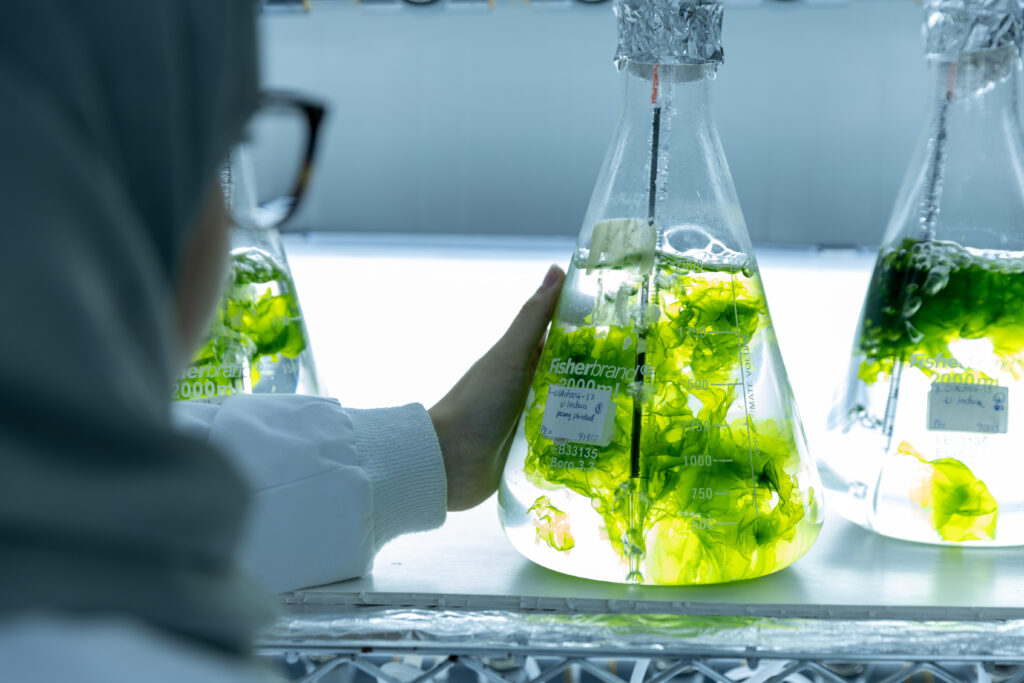
Algal biotechnology in Saudi Arabia is rapidly emerging as a cornerstone of the Kingdom’s bioeconomy and food security strategy. With limited agricultural resources and heavy reliance on imported fishmeal and soybeans, Saudi Arabia has identified over one million hectares suitable for algae cultivation — a resource with vast untapped potential.

To capitalize on this opportunity, the Ministry of Environment, Water and Agriculture (MEWA) launched the Development of Algal Biotechnology in the Kingdom of Saudi Arabia (DABKSA) project. In partnership with KAUST Beacon Development (KBD), the initiative focuses on algae cultivation, feed security, carbon capture, and bio-based product development — directly supporting the Kingdom’s Vision 2030 goals.
Reducing Dependence on Imports

Saudi Arabia’s growing demand for protein-rich feed has historically been met through imports. Limited domestic resources made self-sufficiency difficult, while climate conditions prevented traditional large-scale crop production.

Algae offered a solution: high productivity per hectare, resilience in desert environments, and versatility across industries including food, feed, agriculture, nutraceuticals, and bio-based materials.

Building Algal Biotechnology in Saudi Arabia

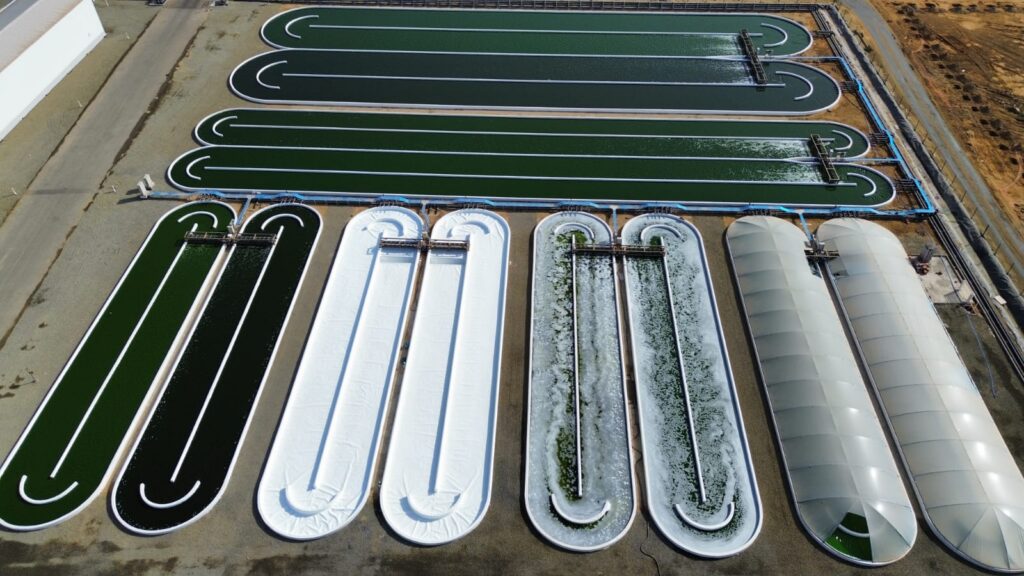
Building on this success, the project advanced to an industrial demonstration scale:

More than 20 native and commercial microalgae strains, including Chlorella sp., Tetraselmis sp., and Limnospira maxima, proved robust. Results showed >40% protein content in dry biomass, validating algae’s role in feed, pigments, and biostimulants.

Phase II: Production Plant

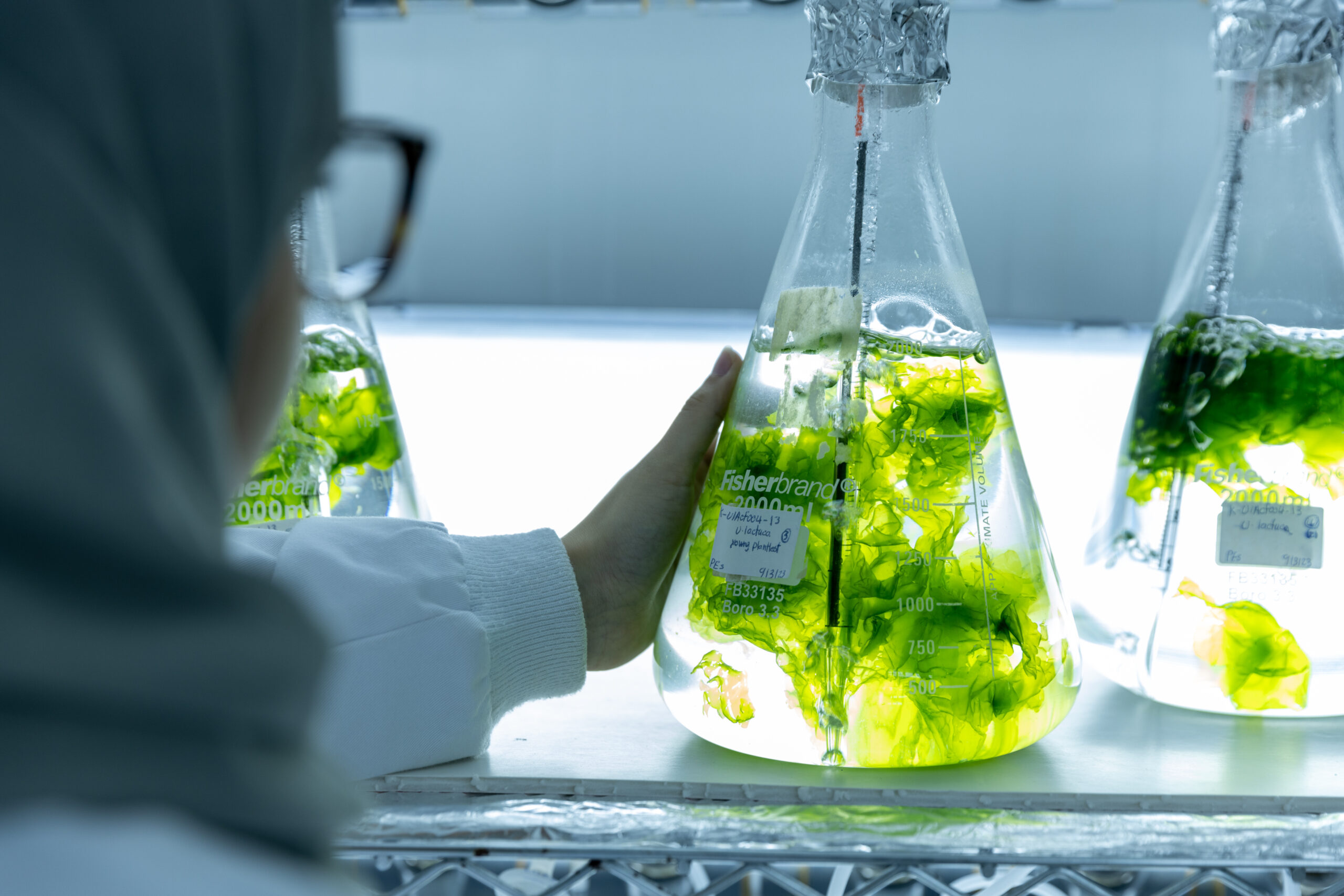
The project began with Phase I, a pilot facility at KAUST that focused on testing:

Key Results

0+ strains

Locally adapted to Red Sea salinity (42 ppt), cultivated from lab to outdoor scale.

0 kg/day

Dry biomass (>40% protein), ideal for feed, pigments, and biostimulants.

0 m³ capacity

Across open raceways, supporting year-round cultivation in desert conditions.

0 kg CO₂/day

Captured from ambient and injected sources during cultivation.

  • More Than a Cultivation Facility

    What started as a pilot is now a national, open testbed that links researchers, industry, and investors. It accelerates product development, trains local talent, and proves bankable models across feed, agriculture, carbon, and seaweed value chains.

  • Impact

    Food & Feed Security

    Producing sustainable protein-rich biomass to reduce imports.

    Carbon Capture

    Microalgae cultivation shown to capture up to 1.8 kg of CO₂ per kg of dry biomass.

    Seaweed Utilization

    Pilot projects in bioplastics and eco-friendly textiles from coastal brown seaweed, supporting the circular bioeconomy.

    Meet your Expert

    With a multidisciplinary team of over 150 professionals KBD combines local talent with global experts under one roof. Our mission is to drive transformative change and help achieve the nation’s Vision 2030 by providing strategic, science-backed solutions.

    Dr. Claudio Grunewald
    Director of Algae

    Our Expertise and Focus Areas